
Key Takeaways
- The Troodos range, crowned by Mount Olympus, is Cyprus's high-country playground — cooler, greener and far quieter than the coast.
- Most signposted nature trails start near Troodos village, the Platres area or Kakopetria, so you can base yourself in one spot and walk several.
- Caledonia Falls is the classic waterfall walk; Artemis and Atalante loop the Olympus summit through black pines.
- Spring and autumn are ideal — wildflowers, mild air and clear ridgeline views; summer means an early start to beat the heat.
- Bring water, sun protection and proper footwear; many paths are rocky underfoot even when the grade is gentle.
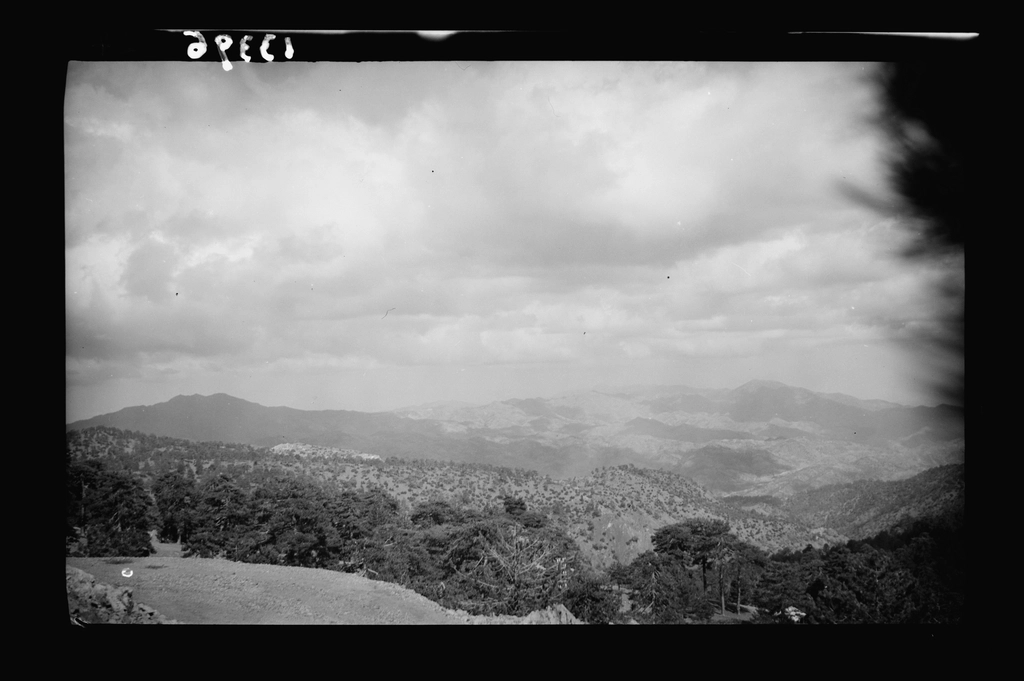
When the coast turns furnace-hot in midsummer, Cypriots head uphill. The Troodos Mountains rise to nearly 2,000 metres at Mount Olympus, and the cool, pine-scented air at the top can feel like a different country from the beaches below. Threaded through these forests is a network of well-signposted nature trails, many laid out by the Forestry Department with botanical markers along the way. They range from short streamside strolls to long ridge walks, and most are easy to reach from the cluster of hill villages around Troodos, Platres and Kakopetria. Here are some of the best-known named trails, what each one offers, and how to walk them comfortably whatever the season.
The Trails Worth Walking
1. Caledonia Falls Trail
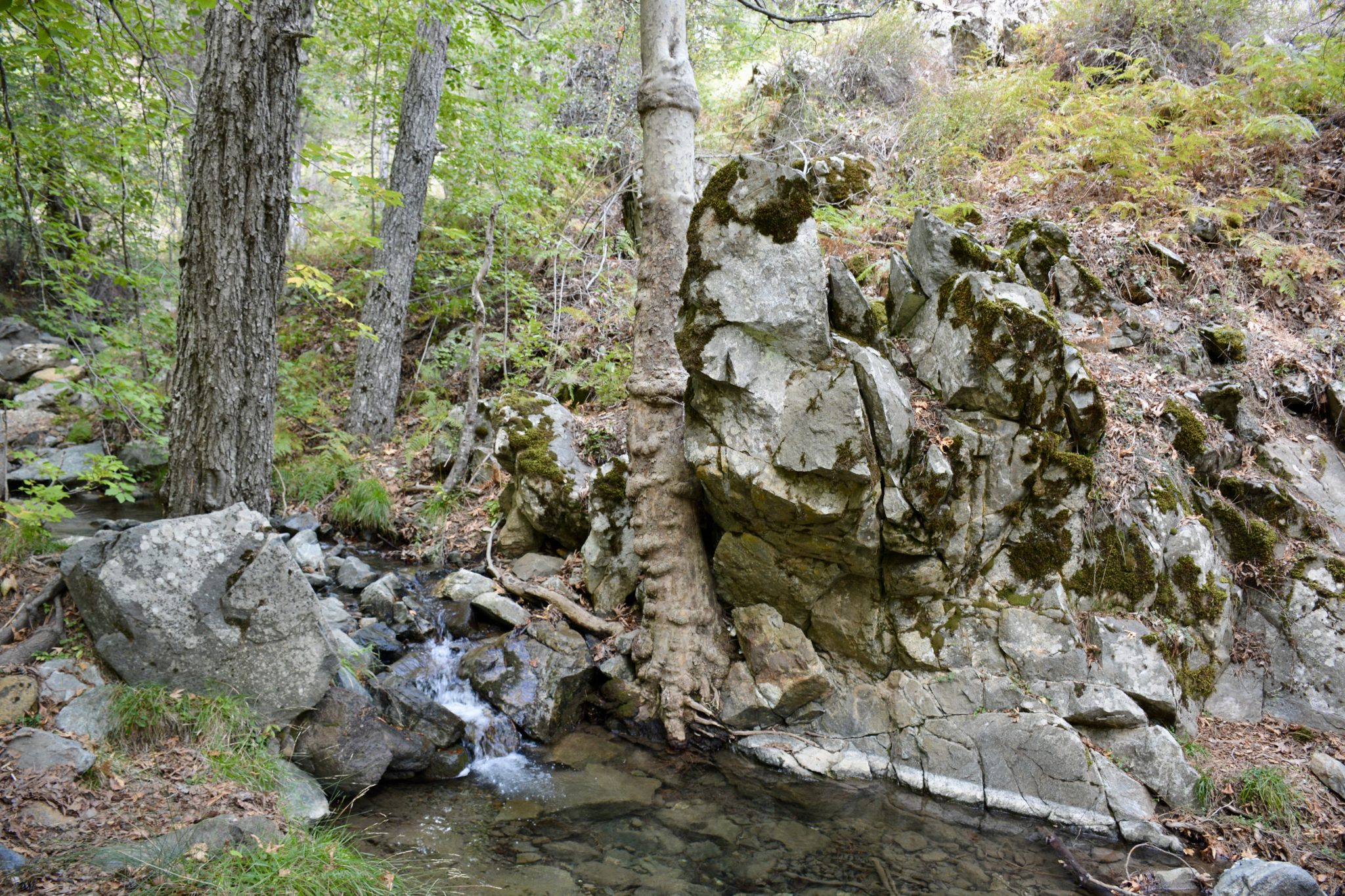
📍 Near Platres · The signature waterfall walk of the Troodos, following the Kryos Potamos stream down to the tallest falls on the island. You pass through shady plane and pine woodland with the water never far from the path, and the falls themselves are a cool reward at the end. It is a downhill-then-uphill route rather than flat, so expect a moderate effort on the return, but the going is straightforward and hugely popular with families.
2. Artemis Trail
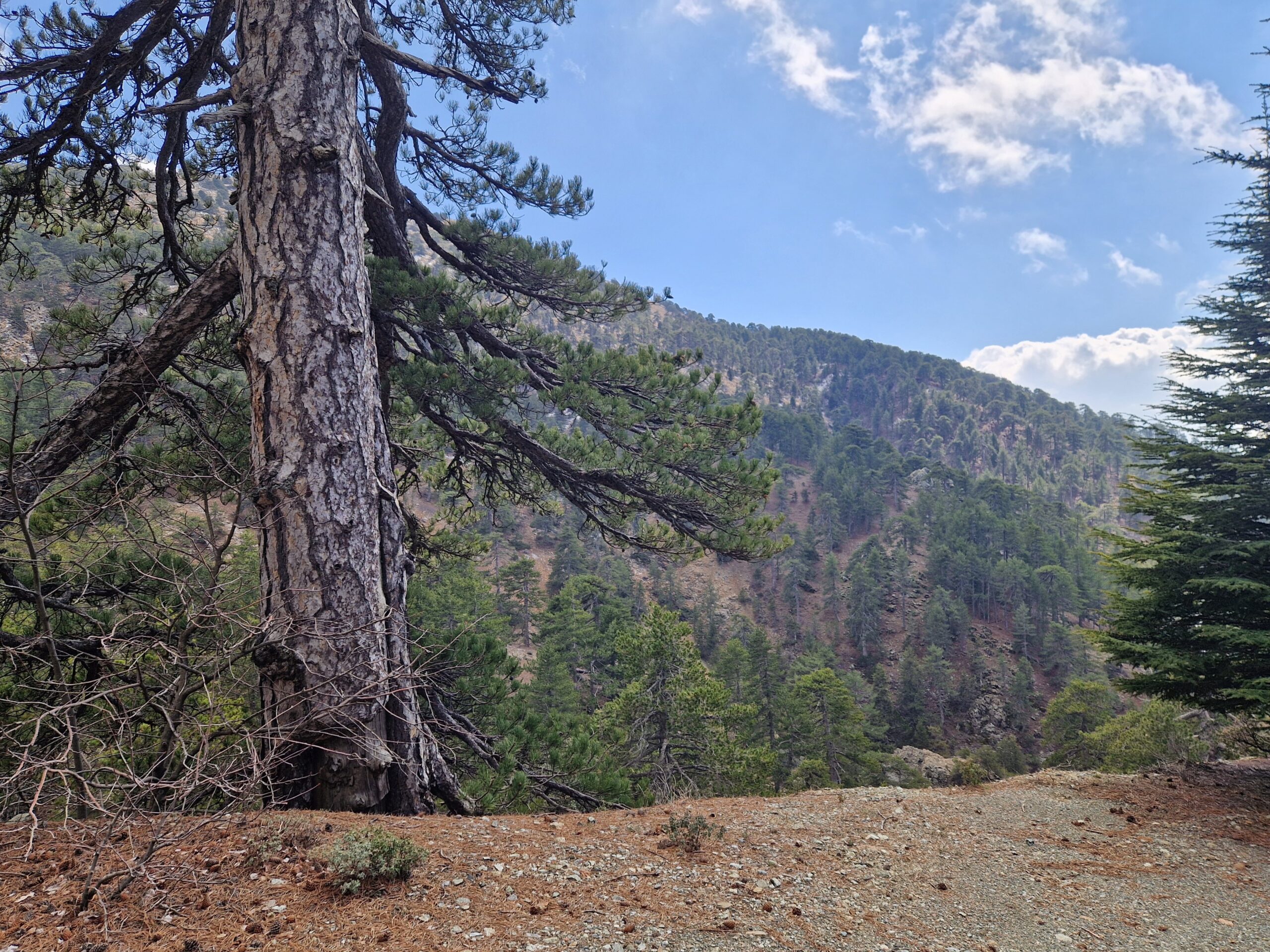
📍 Around the Olympus summit · A circular route that rings the upper slopes of Mount Olympus, the highest point in Cyprus. The path winds through dense black pine and juniper, opening now and then onto wide views over the surrounding ranges and, on clear days, far toward the sea. Because it loops at altitude the grade stays gentle for most of the way, making it one of the most rewarding high walks for the effort — though the surface is rocky in places, so sturdy shoes help.
3. Atalante Trail
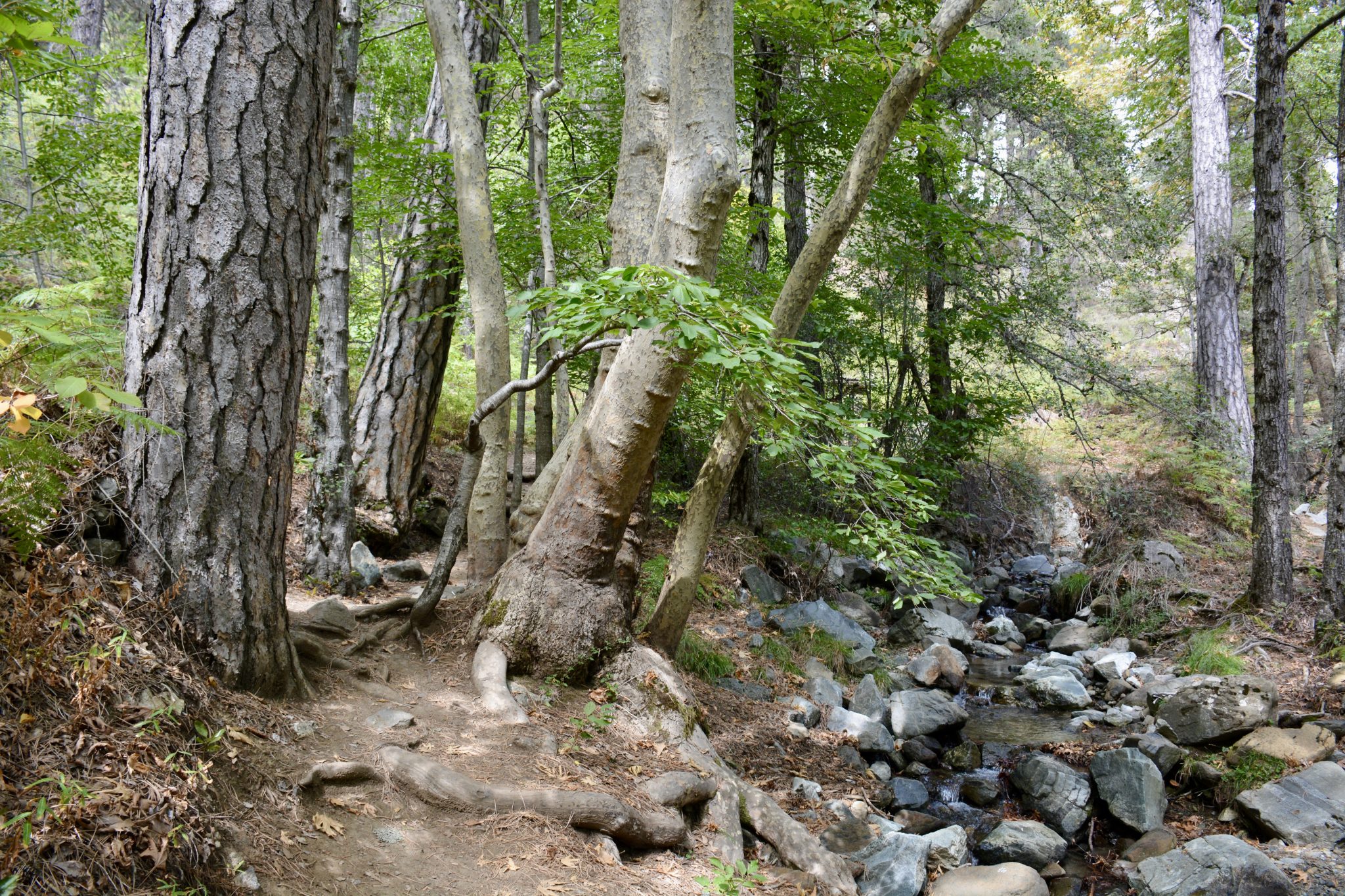
📍 From Troodos Square · A longer companion to the Artemis loop, circling Olympus lower down the slope and named after a figure from Greek myth. The trail runs largely level through cool forest, passing an old spring and the occasional abandoned mine adit, with shaded stretches that stay pleasant even in warmer months. It is longer than most of the other walks here, so it suits hikers who want a fuller half-day out rather than a quick leg-stretch.
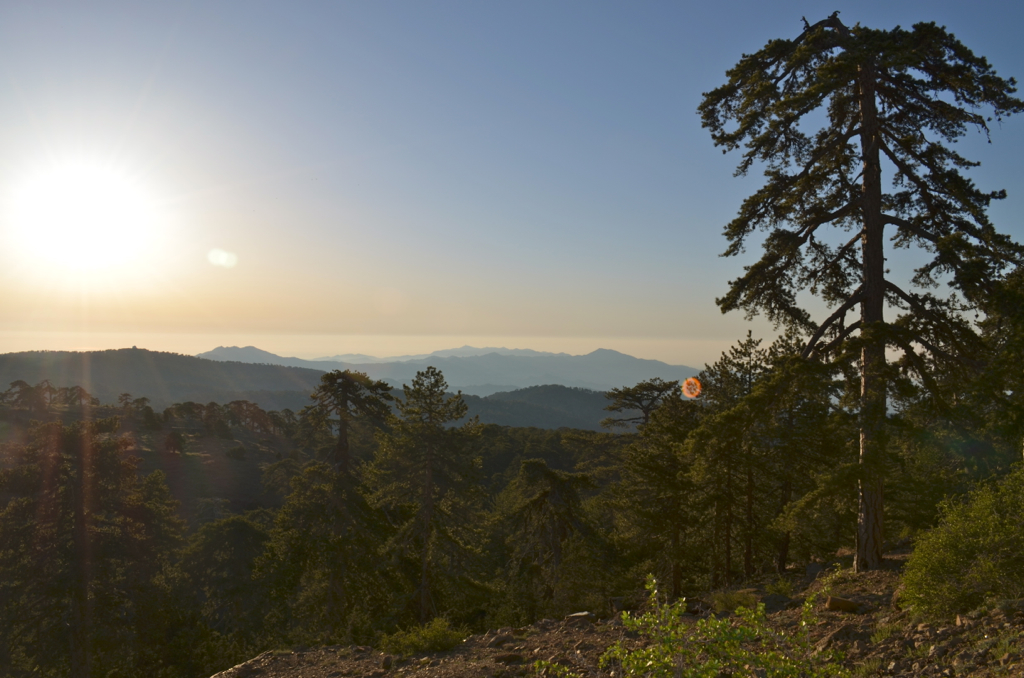
4. Persephone Trail
📍 From Troodos village · A there-and-back walk that leads out to the Makrya Kontarka viewpoint, where the forest suddenly drops away and the land tumbles south toward the southern foothills and the coastal plain. The path is broad and steady, making it one of the more accessible options close to the village, and the payoff is one of the finest panoramas in the range. Go in the late afternoon for soft light over the valleys.
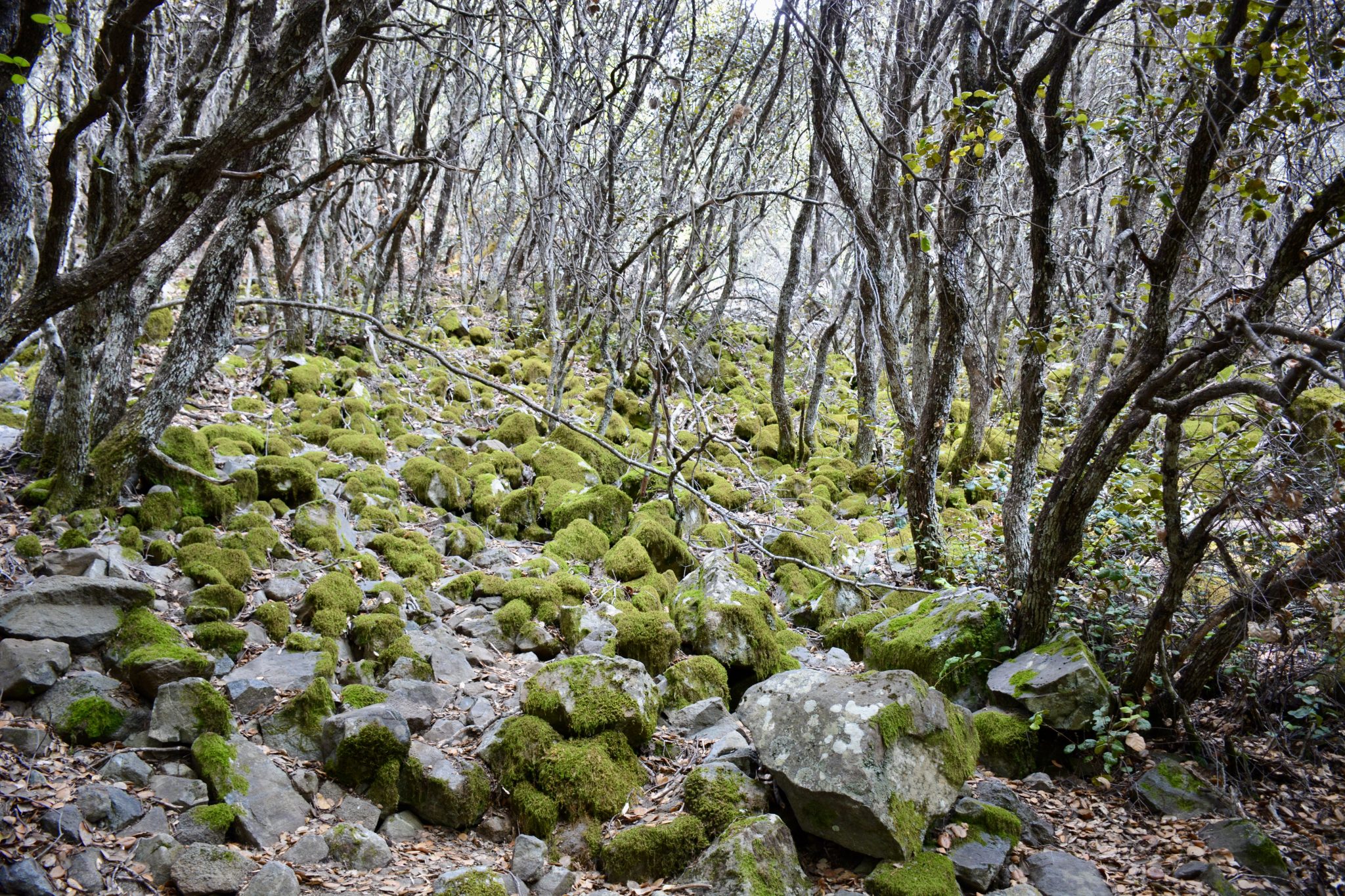
5. Kannoures Trail
📍 Troodos forest, off the Karvounas–Prodromos road · A quieter linking trail through some of the most untouched forest in the range, away from the busier summit loops. Expect mossy banks, tall pines and the kind of stillness that makes the Troodos special, with relatively few other walkers about. The terrain undulates rather than climbs hard, so it sits in the easy-to-moderate bracket and rewards anyone who wants forest solitude over headline views.
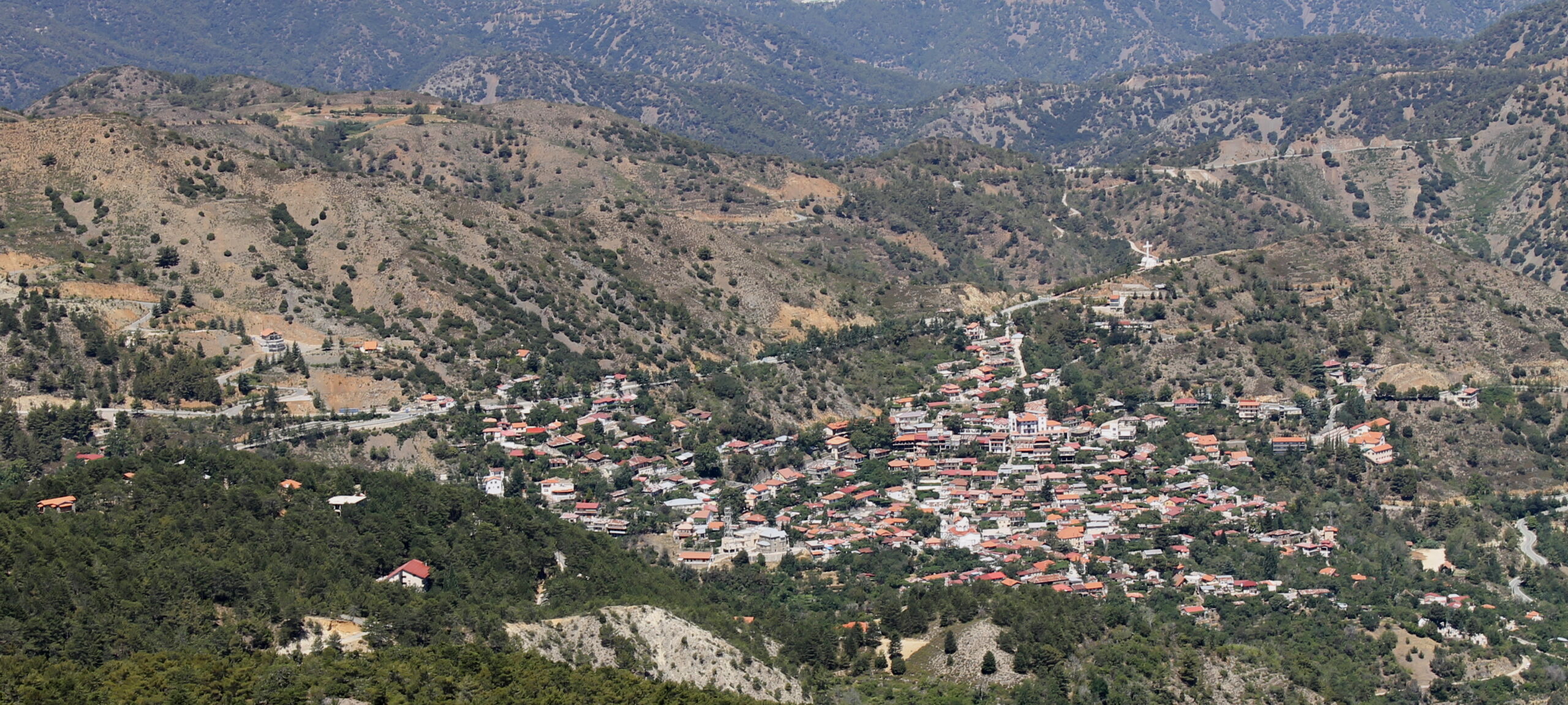
6. Teisia tis Madaris Trail
📍 Madari ridge, above Kyperounta · A spectacular ridgeline walk along the Madari massif in the eastern Troodos, where the path traces the crest with open views falling away on both sides. A restored stone fire-watch point sits near the high ground, and the exposed sections give a real mountain feel that the forest loops do not. The ridge can be windy and the footing uneven, so it leans moderate — but for sheer scenery it is hard to beat.
Frequently Asked Questions
When is the best time of year to hike in the Troodos?
Spring (roughly April to June) and autumn (September to November) are the sweet spots, with mild temperatures, wildflowers and clear air. Summer hiking is very doable if you start early to avoid the midday heat, while winter brings cool, sometimes snowy conditions on the higher routes around Mount Olympus.
Where do most of the trails start?
The main cluster of signposted nature trails radiates from Troodos village and Troodos Square, with others reachable from the Platres area, Kakopetria and the Karvounas–Prodromos road. The Madari ridge trail sits further east, above Kyperounta. Basing yourself in one of these hill villages lets you walk several without long drives.
Are the trails suitable for families and beginners?
Many are. Caledonia Falls and the Persephone viewpoint walk are popular with families, and the summit loops stay fairly gentle in grade. That said, surfaces are often rocky and some routes involve real ascent on the return, so wear proper footwear and judge each walk against your group’s pace.
Do I need a guide or a permit?
No permit is needed for the public Forestry Department nature trails, and they are signposted and free to walk on your own. A guide is not required but can add depth if you want help identifying the endemic plants and birdlife. Free trail leaflets are usually available at the Troodos visitor centre.
What should I bring on a Troodos hike?
Carry plenty of water, sun protection (hat, sunscreen and sunglasses), and sturdy walking shoes or boots for the rocky ground. Layers help, as the summit can be noticeably cooler and breezier than the trailhead. Download your route in advance, since mobile signal can be patchy in the deeper forest.
Plan Your Troodos Escape
From mountain guesthouses and tavernas to guides, gear and car hire, find trusted local businesses across Cyprus to make your hiking trip effortless.
Comments